For instructors, speakers and workshop leads · macOS
Write the lecture from its sources.
Attach the readings, ask for an outline, and get a slide deck that cites them. Then speaker notes, practice questions and an instructor guide, from the same sources. Everything stays as plain files in a folder on your Mac.
 Powered by Oberik
How it works
From a folder of readings to a deck you can teach from.
Attach the sources
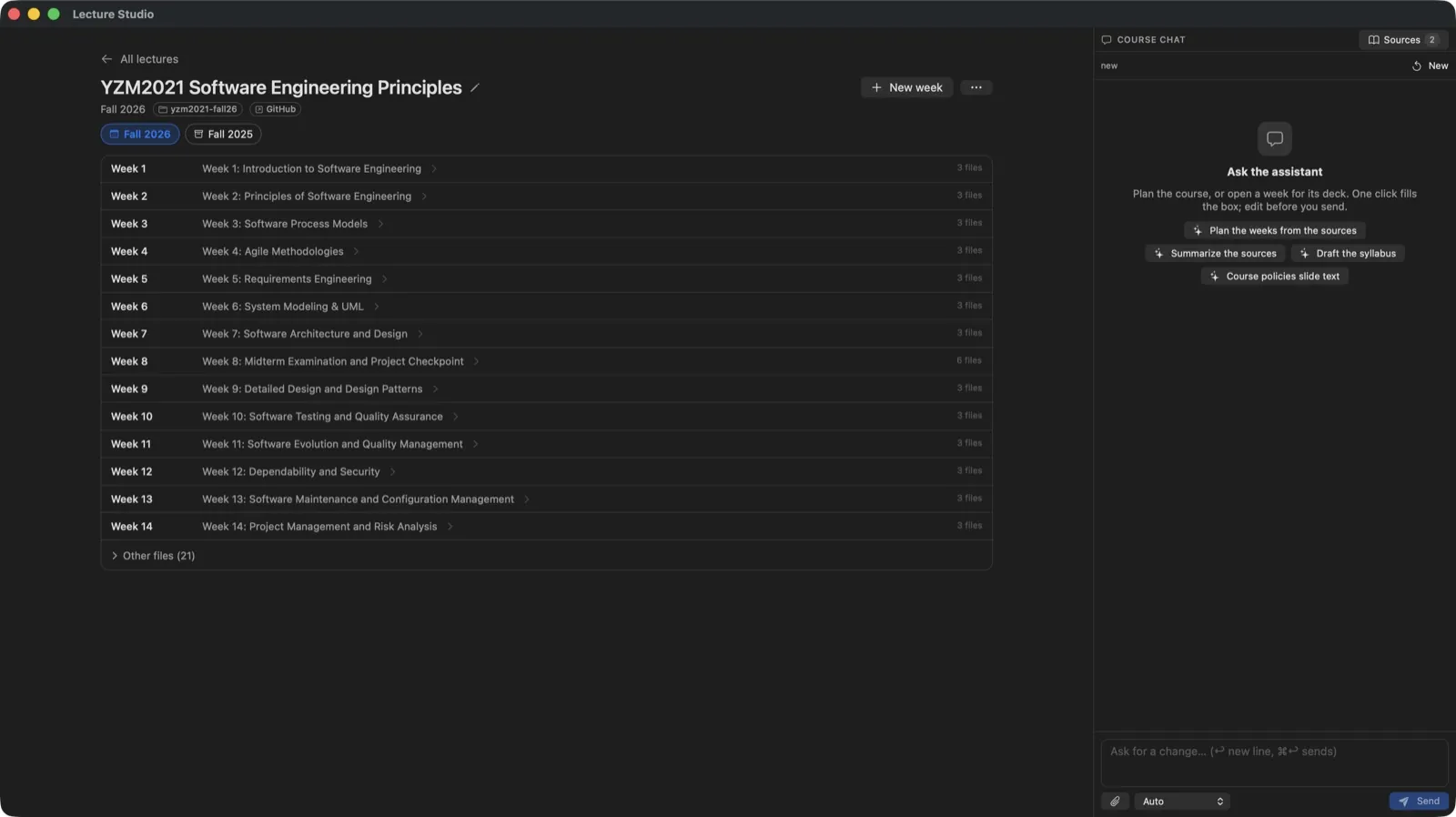
Drop the chapters, papers and handouts into the course or the unit. PDF, Markdown, Word and Excel are read in place.
Ask for an outline
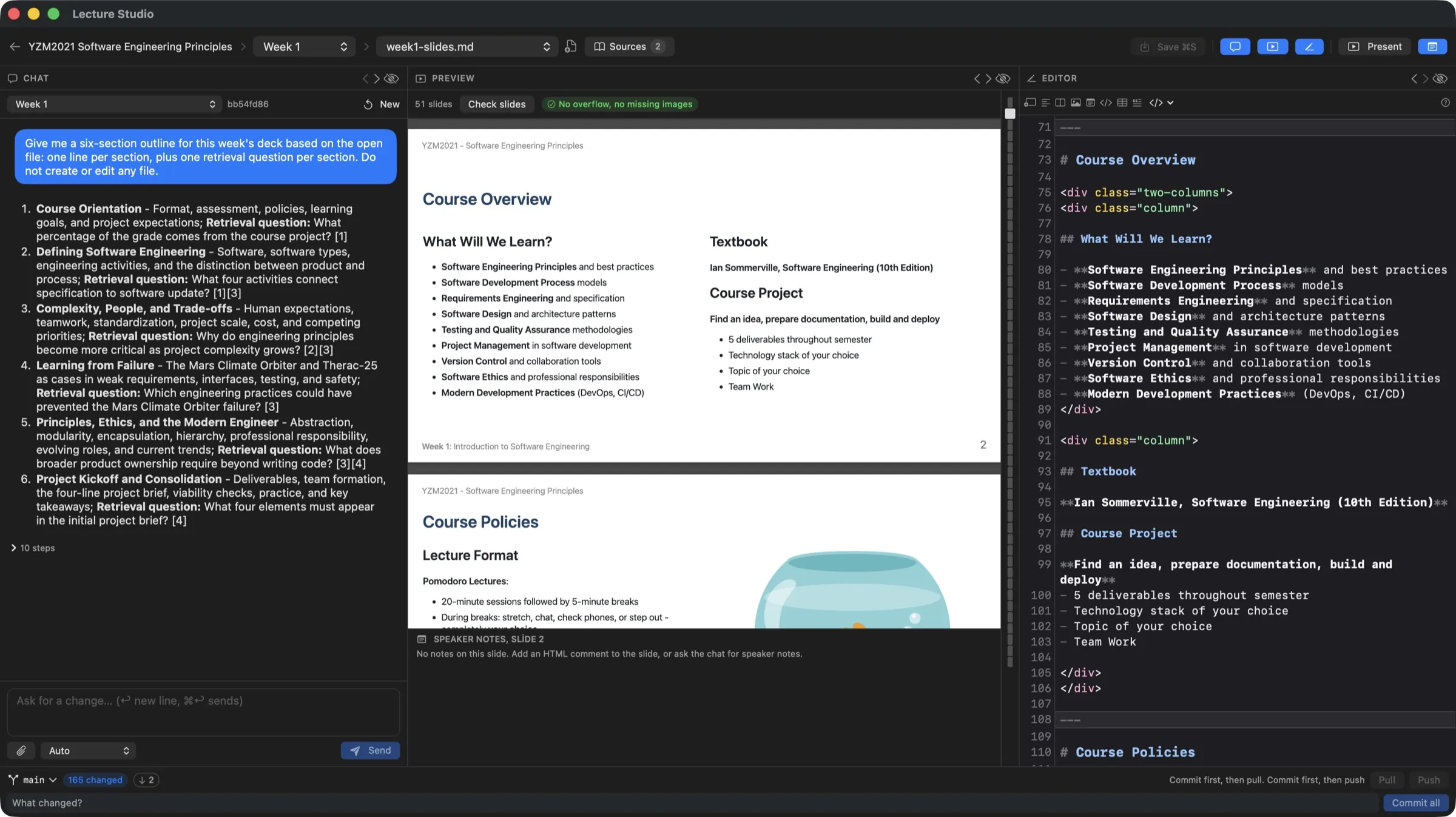
One-click starters fill the request. The assistant reads the sources and proposes the sections, with the source each one rests on.
Get the deck
A Marp Markdown deck, slide by slide, with citations back to the readings. Preview, overflow checks and the editor sit side by side.
Add what the room needs
Speaker notes, practice questions, an instructor guide, rehearsal timing. Same sources, no retyping.
Inside the app
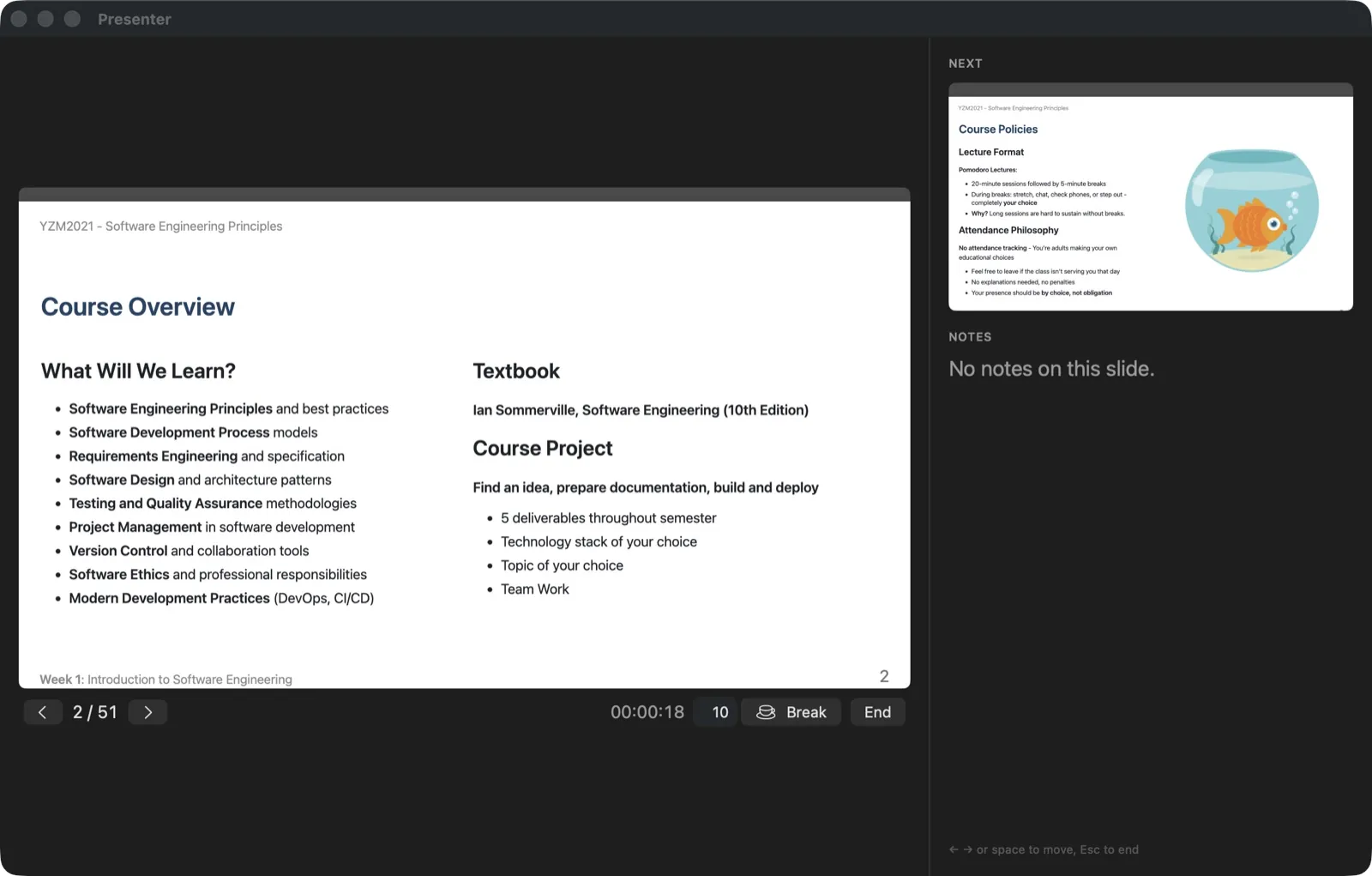
Three screens, one folder.
What you get
Built around how a course actually runs.
Decks are Markdown
Marp Markdown, one file per deck. Version it, diff it, export it to PDF, PPTX or HTML with Marp tools.
Every claim cites a source
Slides point back to the chapter or paper they came from, so the deck holds up when a student asks where it came from.
Notes, questions, guide
Speaker notes slide by slide, practice questions, an instructor guide and a syllabus draft, all from the same sources.
Courses across terms
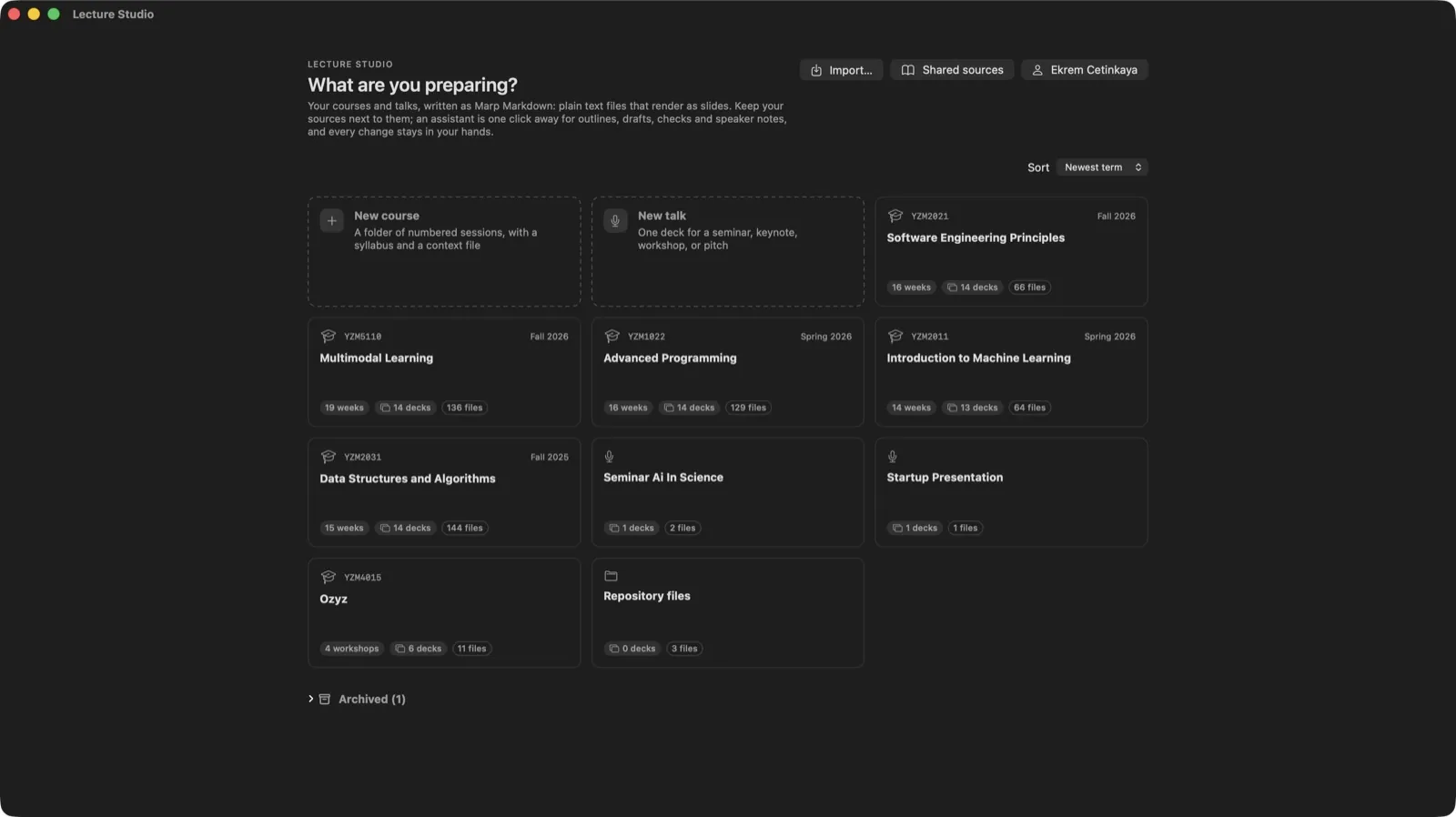
A course keeps its terms. Start the next one as a copy with the weeks redated, archive the old one, compare two terms unit by unit.
Presenter mode
An audience screen with the slide and a break countdown; your notes stay on your screen.
Your files, your folder
Everything is a plain file in a folder you pick. Git is optional; when it is there, commit, push and pull are one click.
Who it is for
Teaching from sources, not from memory.
University instructors running a course over a term: fourteen weeks, a syllabus, a set of chapters, and the same course again next year with the dates moved.
Speakers preparing a talk from a few papers and a deadline: outline, deck, rehearsal timing, audience Q&A prep.
Workshop leads who need the deck, the handout and the exercise sheet to agree with each other.
Built first for Turkish and English university teaching. The presenter profile sets the language; decks and notes follow it.
Questions
Plain answers.
What is Lecture Studio?
Lecture Studio is a macOS app that writes lecture and talk decks from the source materials you attach. It produces Marp Markdown slides that cite those sources, then speaker notes, practice questions and an instructor guide from the same material.
What counts as a source?
Any file you put in a sources folder: PDF, Markdown, Word and Excel are read and previewed; PowerPoint and other binaries are stored and offered for download. Sources can be shared across everything you teach, belong to one course, or belong to one unit. See how a PDF becomes slides that keep their citations.
Where do my files live?
In a folder you choose on your Mac. A course is a folder of units, a talk is a single deck, and every deck is a plain Markdown file next to its assets and sources. Nothing is stored in an app database.
Do I need git?
No. A plain folder works. If the folder is a git repository the app shows the branch and changed files and lets you commit, push and pull; the writing agent never runs git commands.
What format are the decks in, and how do I get a PDF?
Decks are Marp Markdown: one .md file per deck, slides separated by ---, speaker notes as HTML comments. Export to PDF, PPTX or HTML with Marp CLI or any Marp-compatible tool; the Mac app does not export PDF itself yet.
Which Macs does it run on?
macOS 15 Sequoia or later on Apple silicon. The current build is version 0.1.15, about 7 MB, signed with an Apple Developer ID and notarized by Apple.
What does the writing assistant run on?
On Oberik, an agent platform. The app needs an Oberik project key, entered once in Settings; sign-up is open and the download page lists the steps. Your files reach the assistant only through the app; the key is kept in the macOS Keychain.
Is Lecture Studio free?
Yes, during the beta. The app and its updates are free while it is in beta; the assistant needs an Oberik project key, and the download page says how to get one.
Download Lecture Studio for Mac.
Version 0.1.15, free during the beta. macOS 15 or later, Apple silicon. Needs an Oberik project key: how to get one.
Powered by Oberik